Upcycled and Reclaimed Furniture for the Outdoors: Sustainable Style That Lasts
Most people think of reclaimed furniture as something for inside the house, like rustic dining tables, weathered shelves, or industrial coffee bars. But some of the strongest and most interesting pieces are actually made for the outdoors, where they stand up to sun, rain, and changing temperatures every day.
The appeal goes beyond looks. Outdoor reclaimed furniture lets you decorate your patio, garden, or balcony with pieces that have real history, like old scaffolding boards, barrels, or ship timber. This also keeps good materials out of landfills. Unlike many throwaway patio sets, reclaimed furniture becomes more interesting as it ages and often lasts longer than new pieces.
This guide explains why outdoor reclaimed furniture works, which materials are best, how to care for it, and what to consider before buying.
Why Reclaimed Wood Thrives Outdoors
Reclaimed timber often works better outdoors than new wood because it has already been exposed to the elements. Old-growth lumber, cut many years ago, usually comes from slow-growing trees. This makes the wood denser, with tighter grain, and more stable than wood from fast-growing plantations.
This density is important for outdoor use. Dense, close-grained wood absorbs water more slowly, resists rot, and is less likely to crack or warp. Teak from old boats or docks has a lot of natural oil, which makes it very weather-resistant. Reclaimed oak, after many years of curing, becomes very hard and stable.
There are environmental benefits as well. Using reclaimed timber means no new trees are cut down, no extra energy is used to dry new wood, and good wood stays out of landfills. Each reclaimed bench or planter you buy keeps the carbon in the wood stored safely.
Best Materials for Outdoor Reclaimed & Upcycled Pieces
Not all reclaimed materials work the same way outdoors. Here's a quick comparison of the most common choices:
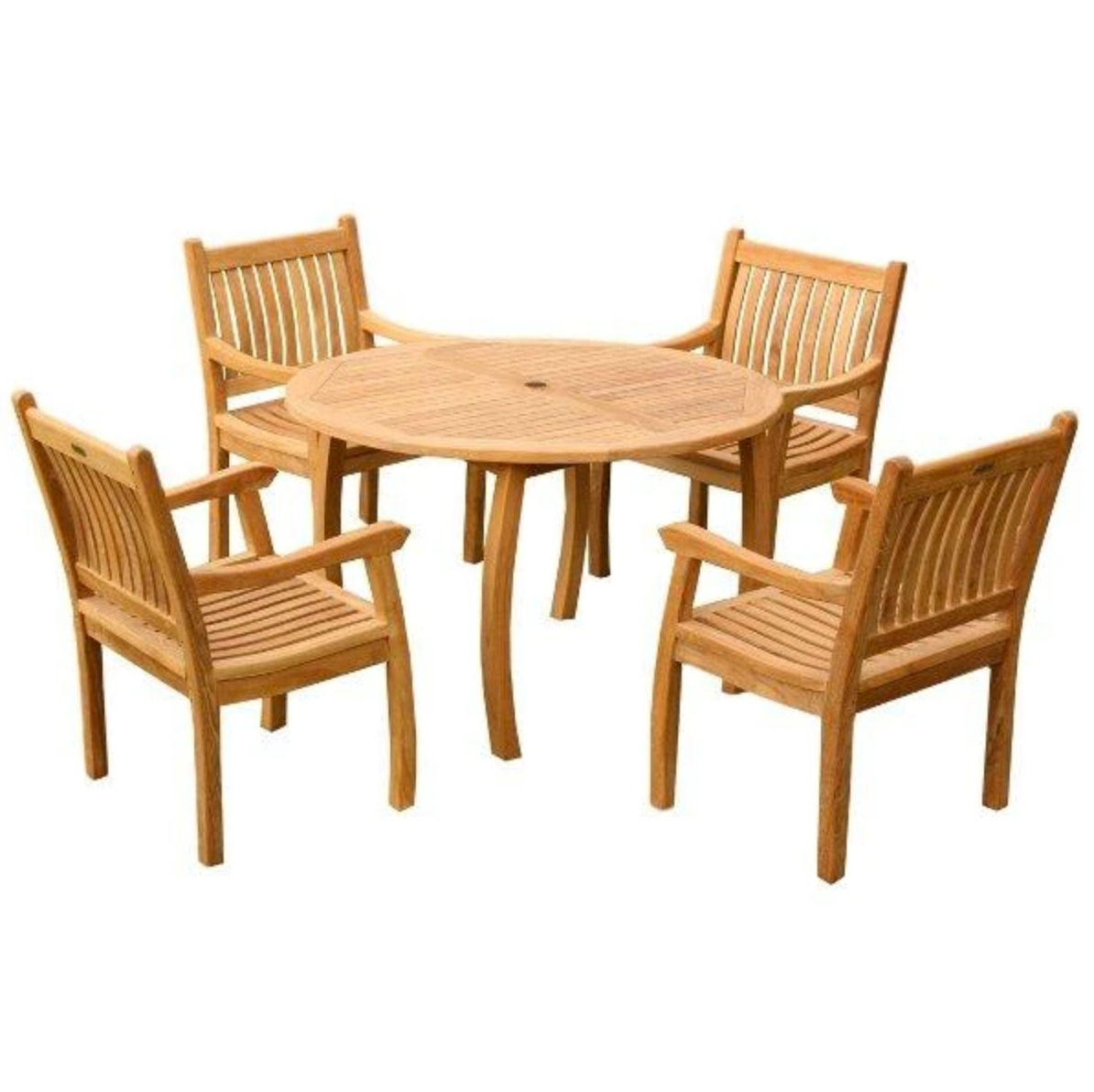
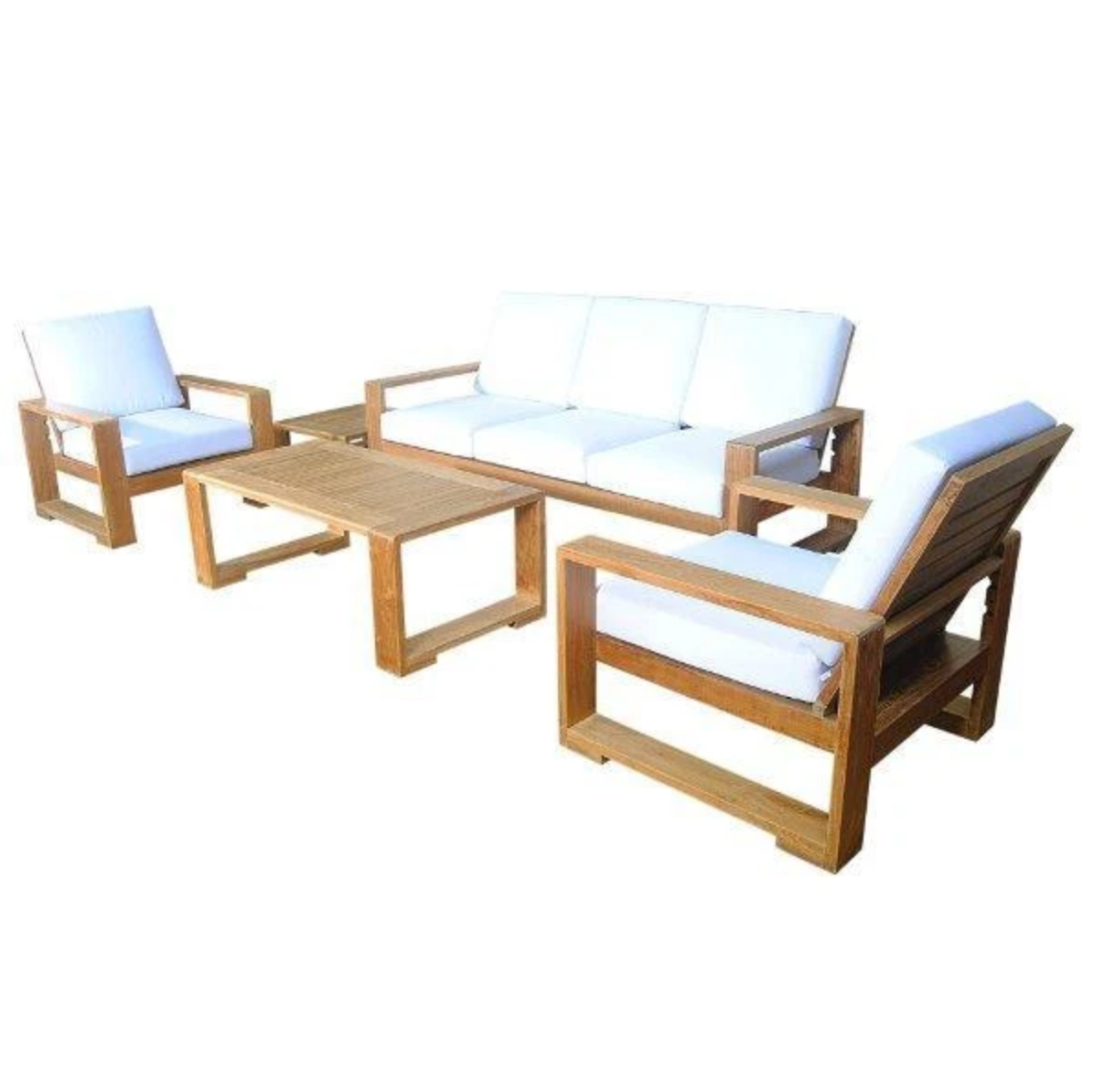
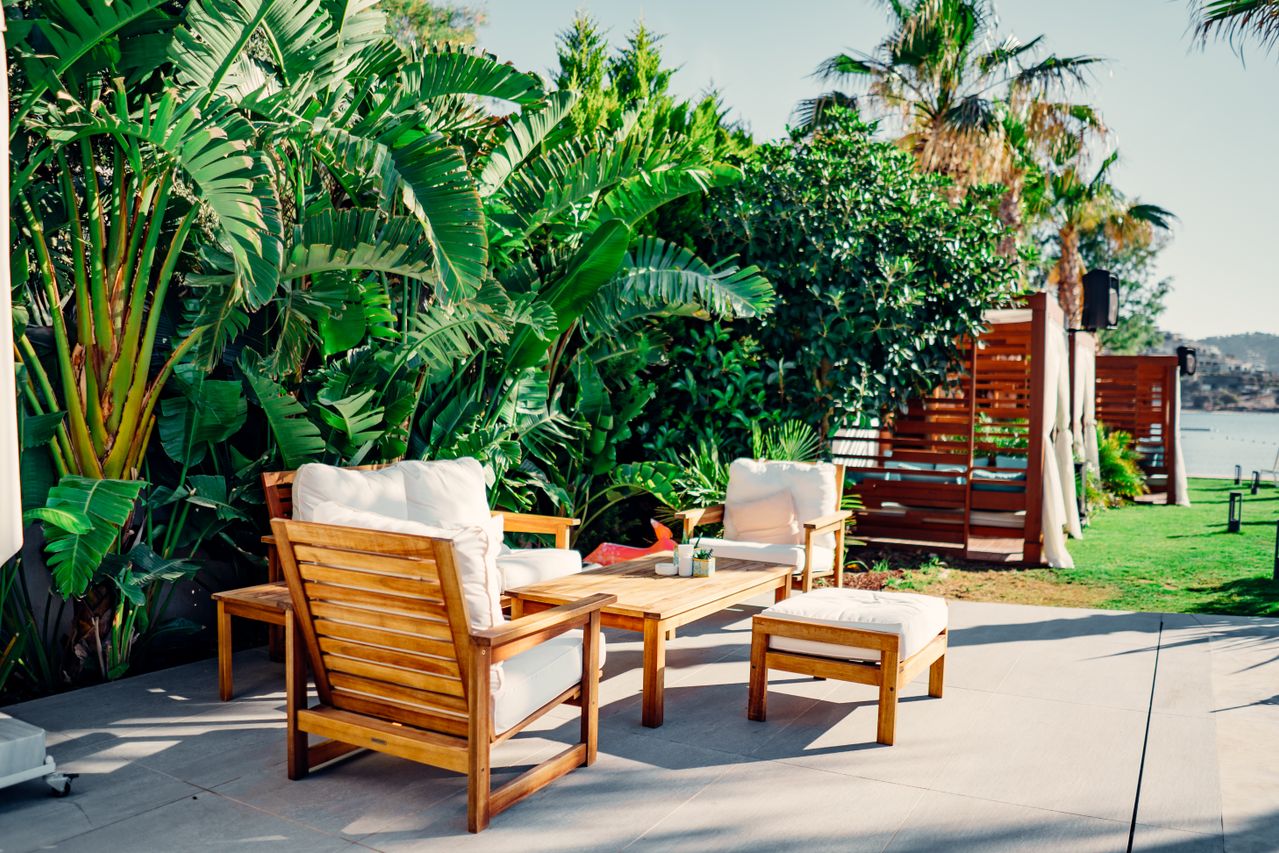
Reclaimed teak.The gold standard for exterior furniture. High natural oils repel water and insects. Salvaged from boats, docks, and old flooring, it weathers to a handsome silver-grey if left untreated.
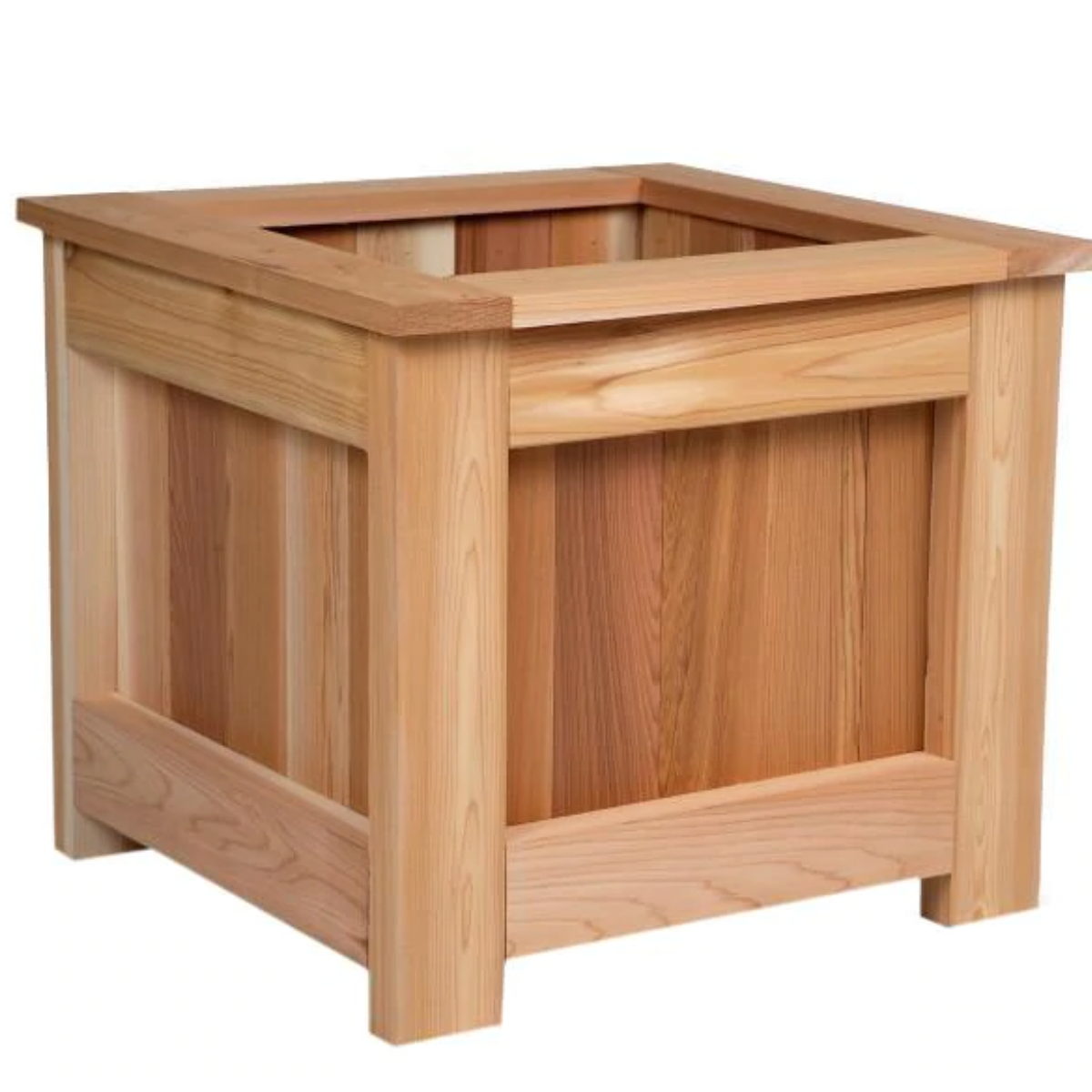
Reclaimed oak.Dense, heavy, and extremely durable once aged. White oak in particular resists moisture well because of its closed grain. Ideal for tables, benches, and planters.
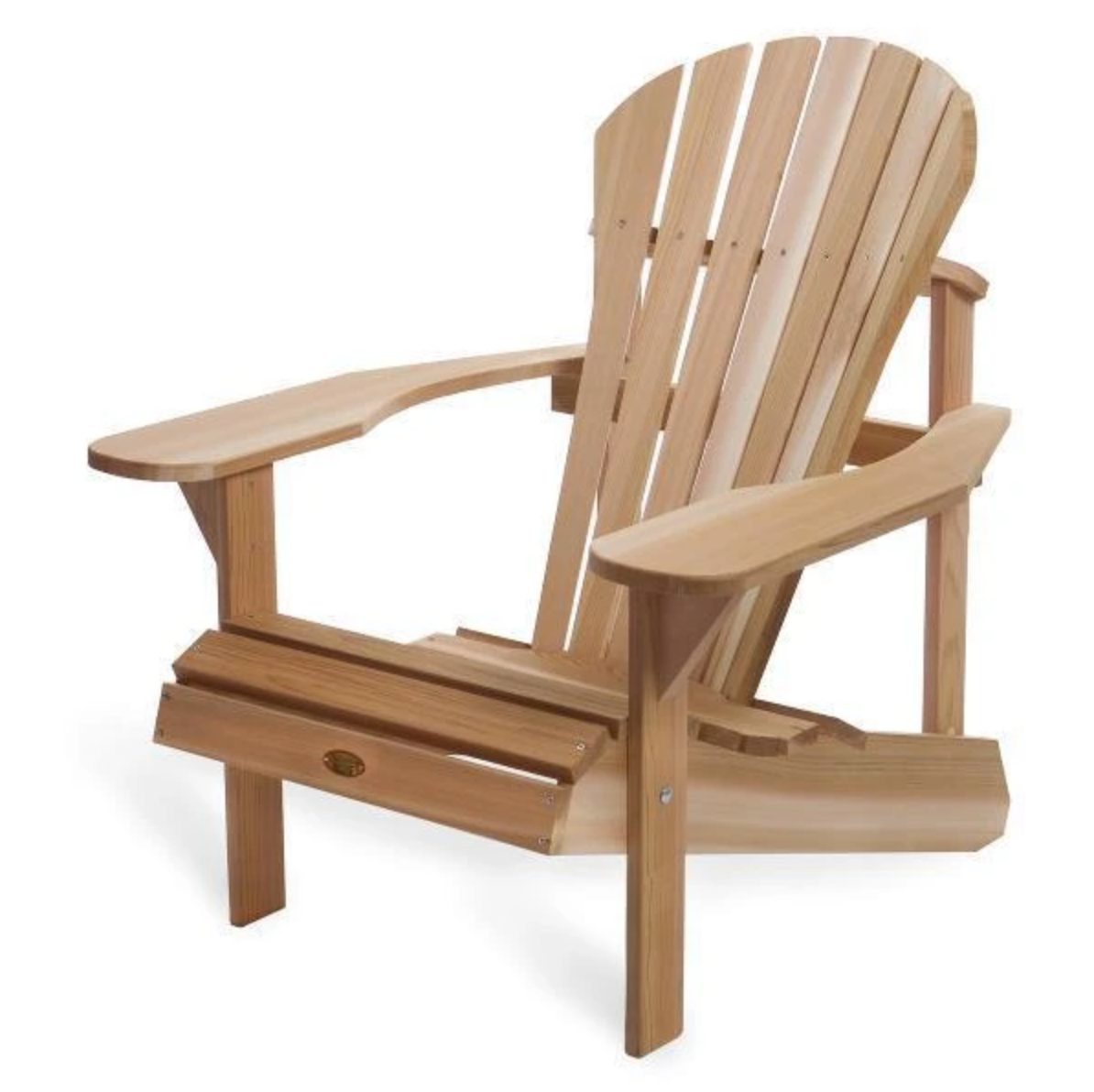
Reclaimed pine and fir. Lighter and more affordable. Both need sealing or frequent oiling outdoors, but they age beautifully and are easy to work with for upcycled projects.
Upcycled metal.Old steel barrels, corrugated roofing sheets, and machinery parts make striking planters, side tables, and frames. Galvanized steel resists rust; untreated steel can develop a stable patina or be sealed.
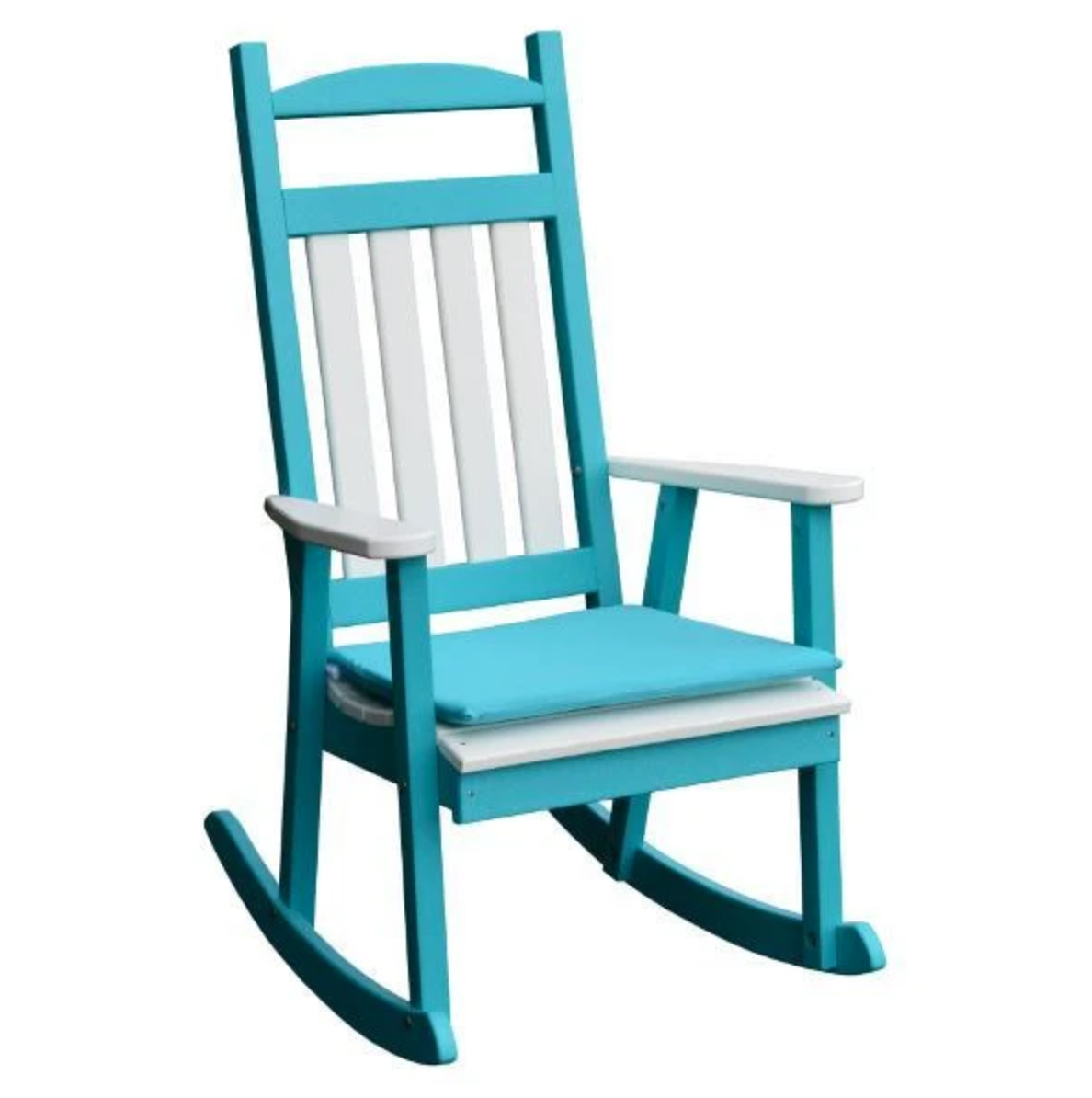
Recycled plastic lumber.Made from recovered milk jugs and packaging, this durable material never rots or splinters. It's the most maintenance-free choice for decking and outdoor chairs, though it lacks the warmth of real wood.
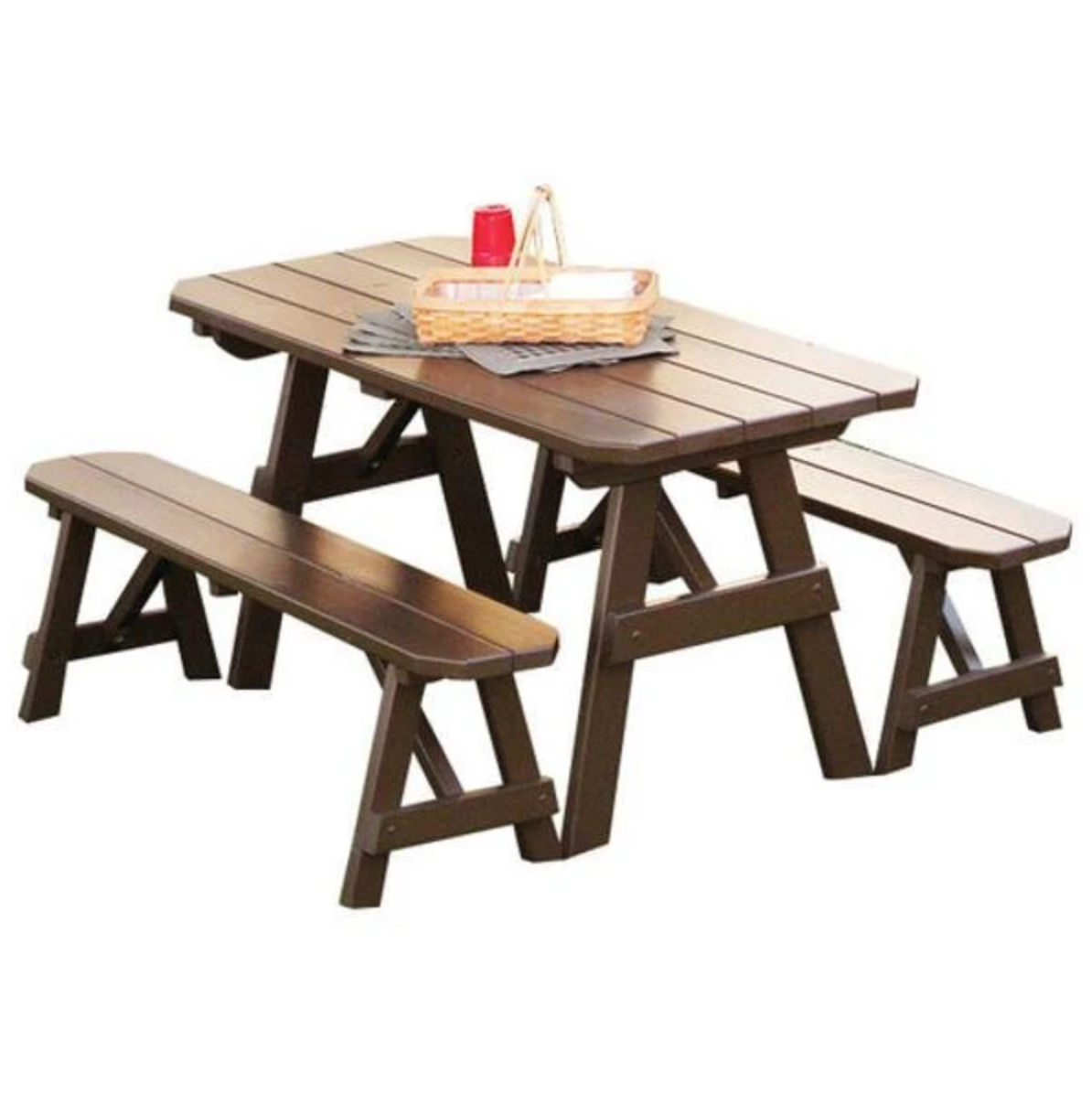
Upcycled pallet wood is popular for DIY projects, but use it with caution. Most pallets are made from soft pine and are only treated for short-term use. If left untreated, they rot quickly outside and need a lot of sealing. They work well for a weekend planter, but not for a table you want to last for years.
How to Choose Outdoor Reclaimed Furniture
Before you buy, consider these quick tips:
Match material to exposure:Choose teak, white oak, or sealed softwood for fully exposed pieces; use more flexible options for covered or semi-covered spaces.
Check the joinery:Outdoor furniture usually breaks at the joints first. Look for galvanized or stainless hardware. Avoid plain steel screws, as they will rust and stain the wood after just one season.
Inspect for prior damage:Reclaimed wood should show character, not rot. Check corners and end-grain for softness, and reject anything with active insect damage or structural cracks.
Ask about the finish:Find out whether the piece is sealed, oiled, or raw. Raw wood changes color outdoors within weeks—fine if you want the grey look, disappointing if you expected to preserve the original color.
Consider Weight:Reclaimed furniture is often heavier than new pieces, which helps it stay put in the wind if you need to move it inside for winter; plan for that.
Common Mistakes to Avoid
Treat reclaimed wood like any outdoor furniture.Aged wood is tough, but it still needs an outdoor-grade finish. If you use just one coat of indoor varnish, it will peel and flake off within a year.
Don't let wood sit directly on soil or wet surfaces, as it will soak up moisture.Choose furniture with feet, or add metal caps or pads to lift the base off the ground.
Remember that weatherproof does not mean maintenance-free. Even teak will change if you do not oil it, and most finishes need a new coat every year or two. The good news is that with reclaimed pieces, a weathered look often adds to their charm.
Be careful with cheap pallet furniture sold as eco-friendly.If it is made from untreated pine and held together with indoor nails, it will not last through even one rainy season. That is not sustainable or a good deal.
Maintenance & Care Tips
For oiled wood:Reapply a quality exterior oil—teak oil or tung-based outdoor oil—once or twice a year, or whenever water stops beading on the surface.
For sealed wood:Light sanding and a fresh coat of exterior-grade sealant each year or two keeps the finish intact. Use marine-grade products for pieces fully exposed to the elements.
For metal:Wipe down occasionally and touch up scratches with rust-inhibiting paint. If you want a bare-steel patina, apply a clear exterior sealant to stabilize it once it reaches the look you like.
For plastic lumber:Wash with soap and water. The maintenance is almost nil.
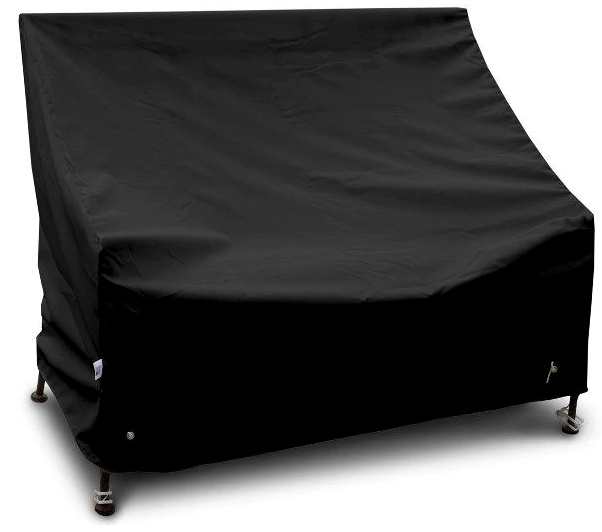
For seasonal care:In harsh-winter climates, cover wood furniture or store it in a shed or garage. If you must leave it out, keep it off the ground and ensure water can drain away.
Latest Trends in Outdoor Sustainable Furniture
Reclaimed outdoor furniture is no longer just about the rough farmhouse style. Here are some current trends:
Mixed-material design pairing reclaimed teak with powder-coated steel frames for a clean, contemporary silhouette.
Live-edge outdoor tables that preserve the natural contours of a salvaged slab.
Modular reclaimed seating built for flexibilityon decks and patios.
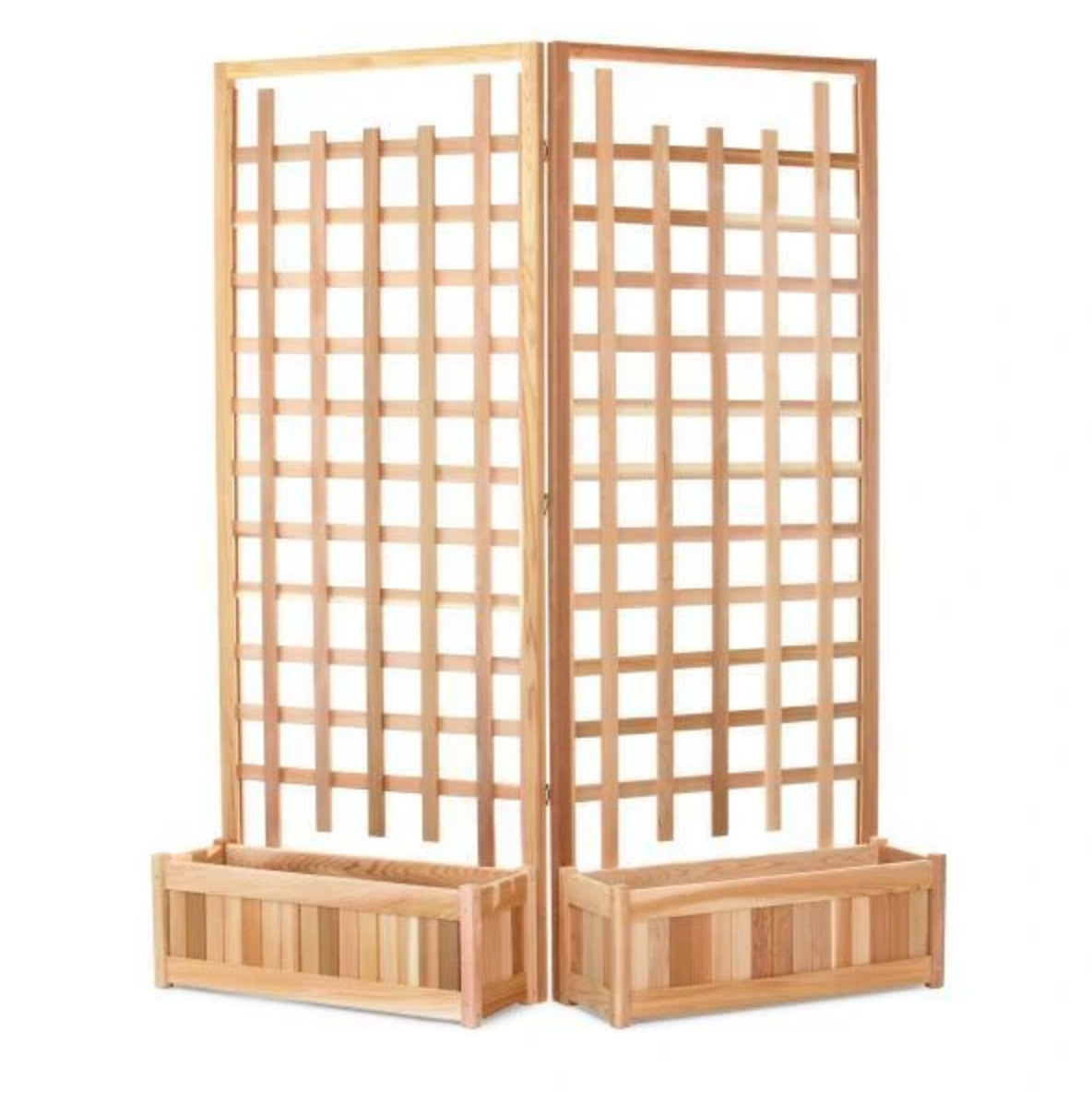
Upcycled industrial planters made from old barrels and troughs, doubling as privacy screens.
Sun-baked finishes and neutral palettes, with designers letting aged wood take center stage rather than hiding its history.
Frequently Asked Questions
Is reclaimed furniture durable enough for constant outdoor exposure?
Yes—when you choose the right material. Reclaimed teak and white oak handle full exposure well with basic oiling. Softwoods like pine need sealing and more frequent care, and are better suited to covered areas.
Does reclaimed wood rot faster than new wood?
No, often the opposite. The dense, slow-grown timber commonly reclaimed tends to resist moisture and rot better than fast-grown new lumber, provided it isn't already damaged when you buy it.
How do I stop reclaimed wood from turning grey?
You can't completely stop the natural silvering that UV light causes, but a UV-inhibiting exterior oil or sealant, reapplied regularly, will slow it dramatically and keep the wood's original color longer.
Is upcycled pallet furniture safe for outdoor use?
Only if the pallets are heat-treated (look for the "HT" stamp) rather than chemically treated, and the wood is properly sealed. Untreated pallets rot quickly, and some chemically treated pallets shouldn't be used near food or seating.
Is reclaimed furniture actually better for the environment?
Generally yes. It diverts material from landfills, avoids new tree harvesting, skips energy-intensive processing, and locks in stored carbon. The main impact consideration is shipping distance for heavy pieces, so buying locally where possible maximizes the benefit.
Conclusion
Outdoor reclaimed furniture offers something most store-bought patio sets can't: real durability, unique character, and a smaller environmental impact. The key is to choose materials suited to your climate and follow a simple care routine, like oiling or sealing once a year. Choose carefully, keep up with easy maintenance, and let your furniture get better with age.
Whether you are setting up a small balcony or a large garden, start with teak or oak for areas that get a lot of weather. Use stainless or galvanized hardware, and keep the base off the ground to prevent moisture damage. Choose pieces with a history you like, and let them age naturally into something unique. Making the right choice now means you will enjoy your outdoor reclaimed furniture for years.
Look for outdoor reclaimed pieces that combine strong, character-rich wood with weather-ready construction. This way, your outdoor space will improve with each season. Choose carefully, keep up with simple maintenance, and invest in pieces that last.